

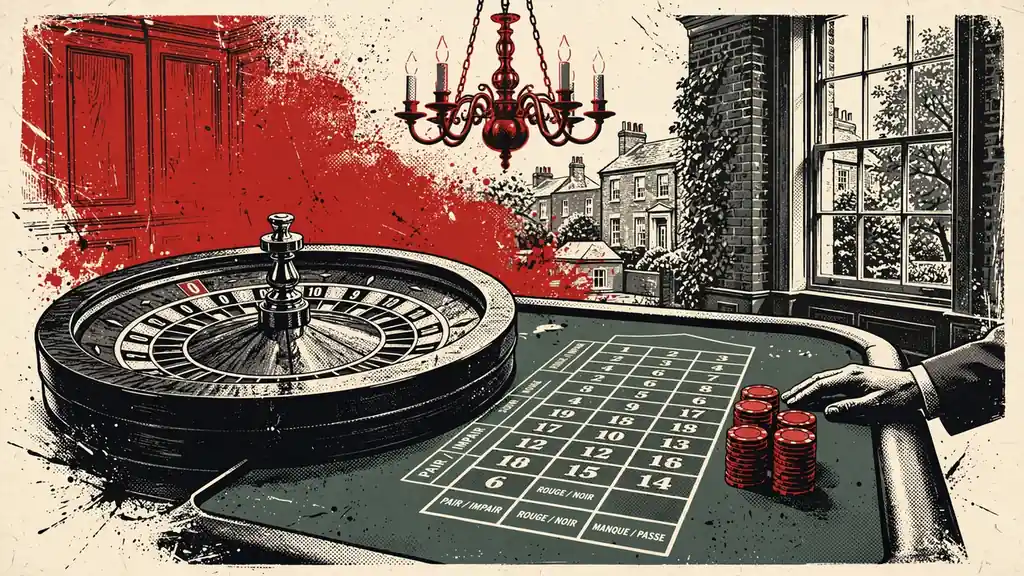
The guide explains La Partage, table formats, bet types and bonus contribution rules for comparing French roulette options.
French Roulette’s Zero Rule Is the Point
French roulette is built around a single-zero wheel. It has the same pocket layout as European roulette: numbers from 1 to 36, plus one green zero. That zero matters because it gives the casino an advantage over time. What makes French roulette stand apart is what can happen to certain bets when the ball lands there.
On a standard even-money bet—such as red or black—the return is normally one unit of winnings for each unit staked. But the zero is neither red nor black, so a bet on either colour would lose if the ball stopped there. La Partage changes that outcome: instead of losing the whole stake, you get half of it back. The other half is lost.
That refund has a measurable effect on the house edge. On an ordinary European roulette table, the house edge is 2.70%. When La Partage applies to even-money bets, the edge on those bets falls to 1.35%. It does not change the result of a spin or make red more likely than black; it softens the cost of the zero when you have placed an eligible bet.
What La Partage changes
Imagine you stake on black and the ball lands on zero. Without La Partage, the stake is lost. With the rule, half comes back. If the ball lands on a number that matches your selection, the bet wins as usual; if it lands on the other colour, the bet loses as usual. The special treatment applies to the zero.
That distinction is easy to miss when you first open an online roulette table. The wheel may look familiar, and the betting layout may be much the same, but the table rules determine whether zero takes the whole stake or only part of it on an even-money bet. I check the rules panel before playing rather than relying on the game’s name alone. A small detail, but it changes the maths.
La Partage does not apply to every kind of wager. Its value is clearest on even-money bets, because those are the bets whose ordinary payout is matched by the stake. If you choose another type of bet, do not assume it receives the same refund. The table’s own rules tell you which bets qualify.
Casino Games: Slots, Live Tables and Crash Games
Where En Prison fits
Some French roulette tables also offer En Prison. If an eligible even-money bet meets zero, the stake is held rather than immediately settled as a full loss. It remains in play for the next spin: a winning result releases the stake, while another zero can leave the bet subject to the table’s stated rule. Read that wording carefully, because the precise treatment is part of the game rules.
The practical difference is that La Partage gives you half the stake back at once, while En Prison keeps the stake tied up for another result. Neither rule removes the casino’s advantage, and neither lets you call the next outcome. They change how a zero affects an eligible wager, not how the wheel behaves.
If both rules appear in the table description, do not assume they are applied together to the same bet. The rules will explain which option governs the zero result. That is worth checking before you place a wager, especially if you are used to a roulette table where zero simply settles against the player.
The point is the zero, not a prediction
French roulette has the lowest house edge among standard roulette variants because of La Partage and En Prison. That is a comparison of the game’s built-in rules, not a promise about what happens during an individual session. A run of spins can still go against you, and the zero can still affect your stake.
When you look for French roulette online, focus first on whether the table actually states La Partage or En Prison and which bets qualify. The label “French” is useful, but the rules panel is what tells you how the table handles zero. Once that is clear, you can judge the game on its actual terms rather than on a familiar-looking layout.
The key idea is simple: French roulette does not make the zero disappear. It gives certain even-money bets a less punishing outcome when zero arrives. That is why its rules matter more than the colour of the felt—or the polish of the screen.
French roulette tables may offer La Partage or En Prison rules. The table’s own rules tell you which bets qualify for these features.
Finding French Roulette at a UK Casino
A roulette lobby can look full and still have no French table. The word “roulette” may cover several versions of the game, so don’t assume a European wheel or a live roulette section is French roulette. Look for the game’s full title in the casino’s lobby, then open its information panel or rules before registering. The detail you are checking for is a French table with the relevant French rules, not just a single-zero wheel.
I start with the casino’s own search and filters. Search for “French roulette” rather than browsing every roulette tile, and check whether the result is listed as a live game, an automated game or both. If the lobby has a filter for game type or provider, use it, but treat the result as a lead rather than proof: titles and filters can be broad, and a game may appear in a general roulette category. Open the game page and confirm its name and rules there.
If nothing appears, try the casino’s full games catalogue as well as its main lobby. Some operators organise games by provider, while others show only a curated selection on the front page. A missing tile on the home screen does not settle the question. Equally, a general “roulette” label does not confirm French roulette. If the catalogue remains unclear, ask customer support whether the exact game is currently available to customers in Great Britain and whether it can be played for real money.
Hi-Lo Casino UK: Search and Verification Guide
Availability can differ between casinos, and it can change as a lobby is updated. That is why I would check the actual catalogue rather than rely on a general claim that a casino offers roulette. The same applies if you want a live French table: confirm that the specific French game is available in the live section. A casino may offer live roulette without offering every roulette variant in that format.
Check the operator before opening an account
For customers in Great Britain, the legal distinction is straightforward: a remote gambling operator selling into the British market must hold the relevant Gambling Commission licence, wherever the operator is based. The UK Gambling Commission is the regulator for online casino activity in Great Britain. A company’s overseas address, familiar branding or polished website does not replace that requirement.
Before entering personal details or depositing, find the operator’s legal name and licence information on its website. Then check the licence number against the UKGC public register. Make sure the register entry belongs to the same operator that runs the casino, rather than assuming that a similar trading name is enough. A platform without a valid UKGC licence cannot legally offer real-money live roulette to British residents. Don’t treat a game being visible as evidence that the operator is authorised.
The age check is another practical part of opening an account. Operators must verify a customer’s age before allowing a deposit, so expect to complete the required checks before paying in. If an account invites you to deposit first and promises to sort out age verification later, stop and clarify the process with the operator. Online gambling in the UK is for people aged 18 and over, subject to the operator holding the appropriate UKGC licence.
DO
- Check the operator’s licence on the UKGC public register.
- Set a financial limit before your first deposit.
- Verify the age requirements of the casino.
DON’T
- Assume a general “roulette” label confirms French rules.
- Use credit cards for gambling.
- Trust a casino without a valid UKGC licence.
There are useful signs of a properly set-up account beyond the roulette catalogue. Remote operators must prompt new customers to set a financial limit before their first deposit and provide accessible controls for managing account limits. UKGC-licensed live casino operators must also offer deposit and loss limits, session time reminders, reality checks, cool-off periods and GamStop self-exclusion. These controls should be reachable from account or safer-gambling settings, not hidden behind a support request.
Payment options can also tell you whether the account flow is being handled properly. UKGC-licensed casinos cannot accept credit cards for gambling, including credit-card funding routed through a money service business; they also cannot accept wallet payments where the wallet lets credit-card funds be used for gambling. If the cashier offers a route that appears to do this, check with the operator before proceeding.
I’d keep the order simple: confirm the French game in the catalogue, confirm the operator on the public register, then complete the account checks and review the available controls before depositing. A broad roulette label is not a promise, and a licence badge on a page is not a register check. Small checks, fewer surprises.
Recommended online casinos
- BeOnBetBonus: 100% up to €500 + 100 FS · Payout speed: 1-3 business days
- NightLuckBonus: Welcome Pack + 805% Up To 6400€ + 280 FS · Payout speed: 1-3 business days
- ChanzeBonus: Slots Welcome Bonus #1 200% up to €500 · Payout speed: 1-3 business days
- JetsetspinsBonus: 200% Bonus + 100 Free Spins + Free Royal Wheel · Payout speed: 1-3 business days
- ZombillionBonus: Welcome Pack 250% up to £4000 + 200 FS · Payout speed: 1-3 business days
- DieselwinBonus: Welcome Pack 250% up to £4000 + 200 FS · Payout speed: 1-3 business days
- EvoSpinBonus: 125% up to €2500 + 125 Free Spins · Payout speed: 1-3 business days
- AmunbetBonus: Join now and get 450% up to 2,700 GBP + 450 FS · Payout speed: 1-3 business days
- WinBeastBonus: €5000 + 500 FS + €650 Freebet · Payout speed: 1-3 business days
How to Judge a French Roulette Casino
A polished lobby tells you very little about whether a French roulette table is a sound choice. I look past the artwork and check three things in the game itself: its rules, its return information and the terms attached to the account. If any of those takes real digging, that is useful information too.
Fast Payout Online Casinos in the UK: What to Check
Read the table rules, not just its name
“French roulette” is not enough detail on its own. Open the rules for the exact table you intend to play and confirm how it treats a zero on even-money bets. Look for La Partage and En Prison, and make sure the wording explains what happens to your stake when the ball lands on zero. A label in a lobby is not a substitute for a rulebook.
Check that the stated rules belong to that specific game, rather than a general roulette page covering several variants. If the table has a help or information panel, read it before placing a bet. The aim is not to memorise every betting option; it is to know which rules govern the table you have opened. I would not rely on a promotional description where the game’s own rules are available.
Find the RTP information
UKGC-licensed operators must make roulette RTP information accessible. Look for it in the game information, help panel or another clearly signposted part of the casino. The figure should be attached to the game you are considering, not buried in a general explanation that leaves you guessing which table it describes.
RTP is a useful point of comparison, but it does not promise what you will get back during a particular session. Treat it as information about the game, not a forecast for your next spin. If you cannot find the relevant figure, or it is unclear which version it applies to, pause and ask the operator where the table’s RTP is published. Clear information should not require detective work.
Inspect the operator’s terms
The terms matter even when the roulette rules look clear. Before you accept an offer or deposit, check the account terms for conditions that could affect how you use the site, including any applicable bonus rules. A headline offer is only part of the arrangement; the terms tell you what the operator actually requires.
Attention A specialist review reports that, from January 2026, UK regulations set a maximum bonus-wagering requirement of 10 times for licensed operators.
A specialist review reports that, from January 2026, UK regulations set a maximum bonus-wagering requirement of 10 times for licensed operators. Read the operator’s current terms alongside that reported cap, rather than assuming an offer works in the way its headline suggests. The specific conditions attached to bonus funds still matter.
Also check how to raise a complaint. UKGC licensees must provide an internal complaints process and access to an approved Alternative Dispute Resolution service. Find those details before you need them, and note how the operator says to submit a complaint. If that route is hard to locate, it is a poor sign for a casino that expects you to trust its terms.
Check the account protections
A casino’s account controls are part of the product, not decorative settings. UKGC-licensed live casino operators must offer deposit limits, loss limits, session time reminders, reality checks, cool-off periods and GamStop self-exclusion. Look for these controls in the account area and check that their purpose is explained in plain language.
Remote operators must prompt new customers to set a financial limit before their first deposit and provide accessible account-level limit controls. Operators also have to verify a customer’s age before allowing a deposit. These are practical checks: can you find the limit settings, understand what they control and see where to get help if an account issue arises?
The UK Gambling Commission is the regulator for online casino activity in Great Britain. You can verify an operator’s licence number on the Commission’s public register before depositing. That check is separate from judging the roulette table, but it gives you a way to confirm that the operator is within the UK regulatory system. Do not treat a familiar brand name as proof.
Fast Payout Online Casinos in the UK: What to Check
I use a simple test: can I identify the rules for the actual table, find its RTP, understand the account terms and locate the protections and complaint route without being sent in circles? If the answer is yes, you have something concrete to assess. If not, move on. A glossy lobby is easy to build. Clear terms are more revealing.
Low Stakes, Standard Tables and Higher Limits
The table minimum is the first figure I check when deciding whether a French roulette game fits my budget. It tells you the smallest permitted bet, not what you should stake or what a typical spin will cost. A low minimum gives you room to place smaller bets; it does not make the game more favourable or make a losing run less costly.
For digital roulette using a random number generator, minimum stakes can be lower than at many live tables, with some games starting at 10p. That makes this format worth checking if you want to keep each bet small. A specialist review reports that some UK live roulette tables also begin at 10p, while auto-roulette and speed tables can have a 5p minimum. Those figures are examples of available table settings, not a promise that every casino or French roulette game offers them.
Low stakes: more room to pace yourself
A low-limit table can suit you if you want to try the game without committing much to each spin. With a smaller minimum, you can place modest bets and decide how long your balance should last. The important detail is the full table limit: a low entry point does not mean every permitted stake is low, and the maximum may be very different from the minimum.
Table Limits
Low minimum stakes make a format worth checking if you want to keep each bet small. However, always check the full table limit, as a low entry point does not mean every permitted stake is low.
I would not choose a table by its smallest figure alone. Check that the displayed minimum applies to the French roulette game you have opened, rather than to another roulette table in the same lobby. Even a small difference matters if you planned to make frequent bets at the minimum. If the table’s limit is not visible until you open it, take a moment to check before placing a bet.
Standard tables: a middle ground, not a fixed category
“Standard limit” is a useful label, but it does not identify one universal stake range. Casinos set their own limits, and what looks ordinary at one table may feel too high or low for you. Read the numbers shown on the specific table rather than relying on the category name.
A standard table may be a reasonable fit when its minimum is within the amount you have set aside for a session and its permitted range gives you enough flexibility. If the minimum already feels uncomfortable, moving up to a more expensive table is unlikely to improve the experience. A familiar-looking label cannot change the cost of each bet.
Higher limits: only useful if you need them
Higher-limit French roulette is aimed at players who want to wager more per spin. It does not offer better odds simply because the stakes are larger. Before joining, look at both ends of the table’s limit range and consider whether you would be comfortable with the minimum as well as the maximum. The maximum is not a target.
It is easy to focus on the largest permitted bet and overlook how quickly larger stakes can use a balance. I find it more practical to decide on a session amount first, then choose a table whose minimum lets me stay within it. If the only available table starts above that level, it is the wrong table for that session.
Keno Online Casinos in the UK: Licensing and Play
The sensible order is simple: set your budget, check the exact French roulette table’s minimum and maximum, then decide whether the format suits the stake you want to place. Low, standard and higher limits describe different entry points, not different versions of the game’s chances. A smaller minimum can help you control the size of each bet. A bigger one simply asks more of your balance.
Live Dealers, Auto Roulette and Faster Spins
A live French roulette table and an automated game can look similar on your screen, but the wheel behind them is different. In a live game, a camera streams a real wheel from a studio. A human dealer sets the game in motion, and you watch the physical ball land in a pocket. The interface lets you place bets while the action is happening; it does not replace the wheel.
Automated roulette removes the dealer and studio stream. The result is generated by a random number generator, or RNG, which simulates a spin. You see the betting layout and the outcome on screen, but there is no physical ball drop to follow. That makes the format feel more direct: place your bets, watch the result appear, then decide whether to play again. It is still roulette, just without the studio performance.
The difference matters most when you settle into a session. Live play includes the dealer’s routine and the time needed for the wheel and ball to complete each round. That gives you a visible pause between decisions. With an automated game, the next round can begin sooner, so it is easier to move from one spin to the next without much interruption.
Speed roulette is a live format that can feature more than 150 spins per hour, compared with 80–100 spins per hour at a standard table.
Speed roulette is another format to look for. It keeps a live wheel and dealer, but aims to move rounds along more quickly than a standard live table. A specialist review reports speed roulette at more than 150 spins per hour, compared with 80–100 spins per hour at a standard table. Treat those as reported pace figures, not a promise of how quickly every table you open will run. The practical point is simpler: fewer pauses can mean less time to reconsider before the next round.
RNG American roulette is also described as running at 150 to 200 or more spins per hour, compared with 50 to 60 spins per hour for live dealer play. Those figures are for American roulette, so they should not be read as a guaranteed pace for every automated French table. Still, they show why a screen-based game can feel brisk beside a streamed wheel.
If you want to watch the ball travel and enjoy the dealer-led rhythm, choose a live table. If you prefer a game that moves on without a studio stream, an automated table may suit you better. Speed roulette sits between those experiences: live presentation, quicker rounds. None of these formats makes a spin more predictable; they change what you see and how quickly you face the next decision.
Live Casino Lightning Roulette in the UK
I’d pay attention to the pace before settling in. A fast interface can make a session feel shorter than it is, while a live feed gives each round more breathing room. If you find yourself clicking through without pausing, switch formats or step away. The wheel does not mind waiting.
The Bets You Can Make on the Wheel
A French roulette game gives you two broad ways to place a bet: choose a number or a small group of numbers on the layout, or back an outcome covering a larger part of the wheel. The first kind is called an inside bet; the second, an outside bet. Your chip’s position on the table tells the dealer which result you have chosen.
A straight-up bet is the simplest inside bet: place a chip directly on one number. If that number wins, the payout is 35:1 on both European and American roulette. A split bet covers two neighbouring numbers, with the chip placed on the line between them; it pays 17:1. These bets cover fewer outcomes than broad outside bets, so their quoted payouts are higher.
| Bet | Where the chip goes | Payout |
|---|---|---|
| Straight-up | On a single number | 35:1 |
| Split | On the line between two adjacent numbers | 17:1 |
| Red or black | On the matching outside section | 1:1 |
| Even or odd | On the matching outside section | 1:1 |
| High or low | On the matching outside section | 1:1 |
Outside bets are easier to spot on the layout. Red or black backs a colour; even or odd backs the number’s parity; high or low selects one of the two broad number ranges shown on the table. Each pays 1:1. The chip goes in the relevant marked area rather than on an individual number.
For a first online session, watch how the table records a selection before the betting window closes. A click on a number may place a straight-up bet, while choosing a labelled area places an outside bet. The interface should show your chip and selected stake on the layout, so you can check that you have backed the intended outcome before the spin.
That is the practical distinction: an inside bet names a precise result or a tight group; an outside bet covers a broader category. The payout figures describe what a winning selection returns relative to the stake, not a promise that the result is likely. Clean mechanics.
Straight-up Bet
Example: 35:1 × 1 = 35:1 payout.
Roulette Bonuses: Read the Contribution Rules First
A roulette wager may not move a bonus wagering requirement forward at the same rate as a slot bet. Operators set game weighting, so the game you choose can affect how much qualifying play is recorded. For roulette, many UK operators count wagers at 10% to 20% of the requirement: a bet does not necessarily reduce the remaining figure by its full stake.
The distinction can also depend on the format. One specialist review reports live roulette at 10% or 20% game weighting, while RNG roulette may count at 100%. Treat those figures as an illustration, not a rule for every casino. The terms attached to the offer are what determine how your play is treated.
Before opting in, look for the bonus terms covering roulette specifically. Check whether French roulette is included, whether live and RNG tables have different weightings, and whether any table or game is excluded. Also note when the wagering period ends and what happens to bonus funds or related winnings if you do not meet the conditions. Those details belong to the offer, not to roulette itself.
If you are comparing an online casino with French roulette, do not assume the presence of the game means bonus play on it will count favourably. A low game weighting can make a bonus take longer to clear than its headline figure suggests. If roulette is excluded, your bets may not contribute at all.
Live Baccarat Online Casinos in the UK: What to Check
I check the terms before accepting, not halfway through a session. Once bonus funds are active, the rules can restrict which games qualify and how you can use the balance. Read the relevant clause first; if its wording is unclear, ask the operator to explain it before you opt in.
What a Premium French Roulette Table Actually Changes
“Premium” is a label, not a promise of better odds. On a French roulette table, a higher stake limit changes how much you can place, not the chance of a particular number coming up. The wheel does not know what you wagered.
The main difference may be the setting. Live dealer roulette is streamed from a studio: you see a real wheel, a human dealer and the ball drop. A premium table in that format can make the session feel more like sitting at a dedicated table than tapping through a game screen. The stream is the experience; the word “premium” alone tells you little about the game’s terms.
Before joining, open the table information rather than relying on its name or lobby tile. Check the minimum and maximum stakes, the stated rules for that specific table, and its RTP information. In particular, make sure the French rules you expect are actually listed there. A French label is not a substitute for reading the rules.
Attention A higher stake limit changes how much you can place, not the chance of a particular number coming up.
I would also check whether the table’s pace and presentation suit how you want to play. A polished studio can be pleasant, but it does not make a session safer or more profitable. If the limits sit above what you planned to spend, choose another table; there is no need to treat a premium label as a challenge.
For a UK-facing live table, confirm that the operator holds a current UK Gambling Commission licence and that the licence number appears on the Commission’s public register before depositing. A platform without a valid UKGC licence cannot legally offer real-money live roulette to British residents. Read the table terms first. That is what premium should mean in practice: a clear choice, not a mystery.
Play With a Plan, Not a Roulette System
When you play French roulette online, decide what you want from the session before you start: a set amount you are prepared to lose, a point at which you will stop, and whether you are playing for a short break or a longer stretch. A plan cannot change the wheel’s outcome. It can stop a run of disappointing spins from turning into a decision you would not have made at the start.
The Martingale is the familiar example: after every loss, double the next bet in an attempt to recover what has gone. The arithmetic looks tidy until a losing streak keeps going. Each increase asks more of your bankroll, and there is no promise that the next spin will end the sequence. A system is not a forecast.
Other approaches may involve repeating the same selection, changing bets after wins, or dividing a session into smaller chunks. Treat them as ways to organise your play, not methods for finding a pattern in random results. Previous spins do not tell you what the ball will do next. Roulette is chance, not a puzzle with a hidden answer.
Live Blackjack Online Casinos in the UK: What to Check
I find it more useful to set a stopping point than to devise a clever progression. If you reach it, stop; if you feel the urge to raise a bet simply to get back to even, take that as a cue to step away. A losing streak can hurt your bankroll, and chasing losses can make the damage worse. No system can remove that risk.
Keep the plan plain enough to follow when you are frustrated. Don’t borrow money to continue, and don’t treat a win as proof that a betting pattern works. The wheel has no memory.
French, European and American Roulette Are Not the Same
A roulette lobby can make the games look interchangeable. Check the wheel layout and rules before you choose a table: the number of green pockets affects the odds, and French rules can change them further.
European roulette has 37 pockets: numbers 1 to 36 and one zero. French roulette shares that single-zero layout, but tables with La Partage and En Prison offer a lower house edge on the relevant even-money bets than standard European roulette. The European house edge is 2.70%; La Partage reduces it to 1.35% on even-money bets. French roulette therefore has the lowest house edge among standard variants when those rules apply. Check the table rules rather than relying on the label alone.
American roulette adds a double zero, making 38 pockets in total. Its house edge is 5.26%, higher than European roulette’s. The basket bet, covering zero, double zero, one, two and three, is worse still, with a 7.89% house edge.
Some American tables add a third green pocket marked 000. A specialist review reports a 7.69% house edge for that layout; treat it as a specific table variation, not a standard feature of American roulette.
So when a casino lists “roulette” without more detail, look for the variant name and the wheel diagram. A single zero does not automatically mean French rules are in force, while a double zero signals American roulette. For casino French roulette, confirm that La Partage or En Prison is stated in the rules if you are counting on those terms. Small detail, real difference.