

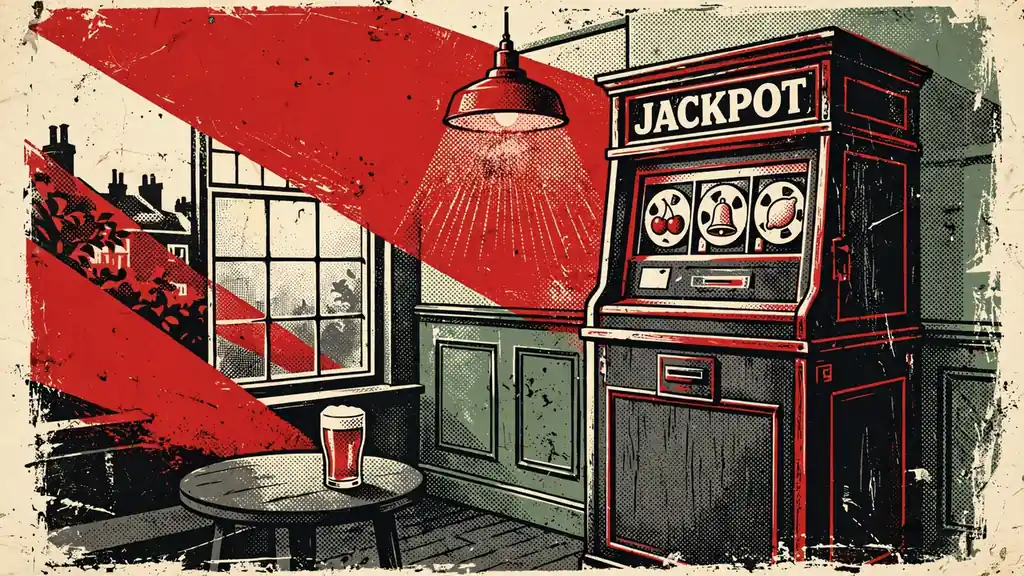
A clear guide to classic layouts, paylines, free-play limits and why reel count alone cannot explain a slot’s payout pattern.
What the Three Reels Actually Change
A three-reel slot makes its layout easy to take in at a glance. There is less on screen to follow than in a larger game, and the familiar arrangement can feel closer to a traditional fruit machine than to a feature-packed video slot. If you like a clear, uncluttered display, that is the main appeal: you can see the reels and the result without having to scan a busy game screen.
That simplicity is about presentation, not a promise of better returns. A compact layout does not tell you how frequently a game will produce a winning result, how large those results might be, or how long a particular run will last. Those details depend on the individual game and its rules. Reel count alone cannot answer them.
I find it helps to separate what you can see from what the game is doing underneath. Three reels give the game a smaller visual frame. They do not, by themselves, reveal how a stake is applied, what combinations count, or what the payout structure looks like. Two games can have the same number of reels and still work differently. The screen gives you a first impression, not the full specification.
The same distinction applies when you compare a three-reel game with one that has five reels. A five-reel slot can apply a bet across all five reels; the number of reels is not, on its own, a description of how the stake is structured. So it is worth looking past the cabinet-style appearance before deciding that a shorter layout must mean a smaller or simpler bet. A neat screen can hide a more involved set of rules, just as a wide one can be straightforward.
Casino Games: Slots, Live Tables and Crash Games
Classic three-reel slots often lean on a familiar visual language: reels arranged in a compact row, symbols that are easy to recognise, and a result that is quick to read. That can suit a short, focused session, or simply a player who prefers not to keep track of several layers of animation and features. But “classic” describes the style more than it tells you how the game behaves. Treat it as a label for the look and feel, then check the game itself.
It is also easy to mistake a visible result for a useful prediction. A few matching symbols may make a game feel readable, but a run of results does not establish what the next spin will do. Nor does a familiar layout turn a random outcome into something you can time. When I look at a slot, I try not to let the old-fashioned appearance do the thinking for me. Familiarity is not an advantage built into the reels.
The broader point applies to every slot. If a game has a house edge in the operator’s favour, the mathematics lean against the player over enough play, even if losses arrive slowly or are interrupted by wins. A three-reel design does not cancel that edge. It can make the action look simpler, but it cannot change the basic difference between an entertaining game and a reliable way to make money.
That is why I would use reel count as a taste preference, not a shortcut for judging value. Choose three reels if you enjoy the compact look and direct presentation. Choose a larger layout if you prefer more space or a different style of game. Then read the rules for the particular slot rather than filling in the blanks from its appearance.
For anyone comparing 3-reel slots online, the useful question is not whether three reels are inherently better than five. It is whether you understand the game in front of you: what the screen shows, how its stake works, and what its own rules say about results. The reel count gets you to the right kind of experience; it does not settle the important details.
Best RTP Casino Slots in the UK: How RTP Works
A three-reel layout can be appealing precisely because it asks less of your attention. That is a practical design choice, not evidence that the game pays more often or treats a stake more favourably. Keep those ideas separate and the format is easier to judge on its merits. Simple to look at; still a slot.
Classic Machines, Fruit Symbols and Paylines
A classic three-reel slot is often presented as an online take on the British fruit machine: a compact window, familiar symbols and a straightforward-looking layout. Cherries, lemons, bells, bars and sevens do much of the visual work. The screen may echo a physical machine, but it is still a digital game, with its own rules and terminology. The old cabinet look is a style, not a rulebook.
That distinction is worth keeping in mind when browsing three-reel slot games online. A title can look like a traditional fruit machine while using a layout or paytable that differs from the machine you remember. Even two games with similar reels may not treat matching symbols in the same way. I’ve found it’s better to open the game information than to assume that familiar artwork means familiar rules.
Paylines are one of the first details to check. A payline is the line across the reels on which a qualifying arrangement of symbols may count. On a classic layout, the line may be shown running straight across the middle, but a game can present its own line configuration and explain which symbol combinations count. Look for the paytable or help panel, and check the diagram rather than relying on the machine’s appearance.
Highest RTP slots in the UK: how to compare
The word “line” can also be used loosely in descriptions. A product page might call a game a single-line fruit machine, while the in-game rules show exactly what that means for its layout. The useful detail is the game’s own explanation: where the line runs, which symbols are relevant and whether the display includes any other ways to form a result. Labels are a pointer, not a substitute for reading the rules.
The same goes for “classic”, “retro” and “fruit machine”. These terms describe a familiar look or style; they do not guarantee a particular number of active lines, a certain paytable or a specific set of features. A three-reel slot machine may have the expected fruit imagery and still differ from another title in the way it displays wins or explains its symbols. Treat each game as its own product.
Reel count is no shortcut for understanding how a stake is structured, either. A five-reel game may apply a bet across every reel, so counting the reels alone does not tell you how its stake is allocated. The game’s rules are the place to confirm the detail. That’s a small check, but it prevents the familiar cabinet style from doing too much of the explaining.
When I compare classic-style games, I start with the paytable and then check the symbol key. The paytable sets out which combinations the game recognises; the symbol key clarifies what the pictures represent. Some symbols may be substitutes or have a special role, but don’t infer that from a picture or label. If the rules do not explain a symbol clearly, I would not guess.
There can be a difference between the short description beside a game and the information inside it. The listing may emphasise fruit symbols or a retro feel, while the help screen gives the precise line layout and the meanings of individual icons. Read the in-game explanation before drawing conclusions from a thumbnail or a familiar name. It is not glamorous housekeeping. Still, it matters.
Do
- Check the paytable and symbol key
- Look for the line diagram in the game information
- Open the in-game help panel
Don’t
- Assume familiar artwork means familiar rules
- Rely on the machine’s appearance for line configurations
- Guess the meaning of symbols
For anyone looking at three-reel slot machines in the UK, the practical point is simple: use “fruit machine” as a clue to the presentation, not as proof that every title follows the same format. Check the line diagram, paytable and symbol notes in the individual game. The compact design is easy to recognise; the terms are where games quietly differ. Classic look, individual rules.
Playing Three-Reel Slots for Real Money in Britain
A three-reel game can appear in both free-play and real-money versions, but the two are not interchangeable. In a free version, the balance is fake money and any wins stay on screen: there is no cash payout to withdraw. Real-money play involves depositing funds with an operator and gambling under the rules that apply in Britain.
I’d treat the operator as the first check, not the slot’s familiar look. The UK Gambling Commission regulates commercial gambling in Great Britain, including remote casino games offered to people here. That requirement applies even if the operator’s equipment is based elsewhere. A site that accepts British customers for real-money gambling must hold the relevant UKGC operating licence; an overseas address does not exempt it.
Before depositing, look up the operator on the Commission’s public register and check that its licence is current. A logo or a sentence on the site is not the same as a register entry. The Commission issues operating licences to gambling businesses and personal licences to certain individuals working in the industry, so check that the business offering the game is the licensed operator. If the name on the payment page differs, pause and make sure you understand who is taking your deposit.
Bonus Buy Slots in the UK: How the Feature Works
Age checks are part of that process. An operator must verify your age before letting you deposit into a gambling account. If a site lets you put money in without checking, that is a reason to stop rather than a handy shortcut. “No registration” can describe a demo that opens in a browser, but it should not mean depositing with an unverified real-money operator.
There are also limits on the amount staked in an online slot game cycle. A specialist gambling review reports a maximum of £5 for customers aged 25 and over and £2 for those aged 18 to 24. These limits concern online slot stakes, not the number of reels or the game’s appearance. Check the operator’s current rules and the Commission’s information if you need to confirm how a limit applies to you.
The deposit itself deserves a separate look. UK-licensed casinos cannot take credit-card payments for gambling, including through a wallet that lets you spend credit-card funds. That restriction is about the funding route, not just whether the casino’s own checkout shows a card option. Read the payment screen carefully before confirming, and do not assume that a wallet changes the underlying source of the money.
Licensed operators must also offer account controls, including a financial limit that new customers are prompted to set before their first deposit. I’d set a limit while opening the account, before a game or a bonus makes the decision feel less clear. The control should remain accessible through the account, so you can review it later. A three-reel layout may look straightforward; it does not make the money involved any less real.
UK Licensing
Only play with operators holding a valid UKGC operating licence. Check the Commission’s public register to verify the business is authorised.
Keep free play in its proper place. It can show you how a game is presented, but its fake balance cannot be converted into winnings, and its results are not a promise about what will happen after you deposit. If you want to try a format without staking money, use a free version for that purpose. If you choose real-money play instead, make sure the account, operator and payment route are clear before funds leave your bank.
A sensible check takes a moment. The important distinction is not whether the game looks like a fruit machine, but whether you are in a non-paying demo or an account with a licensed operator where real money is at stake. No shortcut around that.
Free Online Play: What You Can and Cannot Test
A free version can be a useful way to get a feel for an old-fashioned three-reel slot before deciding whether you even like the format. Where a casino or game provider offers a demo, you can try it without depositing. The balance shown is play money, not a bonus waiting to be claimed.
That distinction matters. Free online play does not award cash winnings, and demo credits cannot be withdrawn. A balance that climbs on screen is part of the practice session; it does not become a payment, even if you have landed a run of winning combinations. Treat it as a way to explore the game, not as a route to real money.
I find a demo most useful for the small, practical questions: can I read the symbols comfortably, do I understand what the game is asking me to do, and do I enjoy watching a compact set of reels? You can also see how the sound and animations feel, or whether the interface is easy to follow. Those are preferences you can judge without putting money at stake.
Free classic three-reel games can also help you learn where the controls are and what happens when you start a round. Take your time with the information displayed in the game, including its instructions and any paytable. A demo lets you inspect those details in context. It does not mean every casino offers every game in free mode, so availability can vary.
Live Casino in the UK: How Online Tables Work
The main limit is that practice cannot show you what a real-money session will feel like financially. A play-money balance has no value to lose or withdraw, so it cannot recreate the pressure of watching an actual balance change. Nor can a demo establish that a slot is a “high payout” choice for you. A few favourable rounds in free play do not prove that the same pattern will continue later.
That is also why there is no reliable trick for how to win on three-reel slots. A demo can show you the game’s rules and presentation; it cannot turn chance into a dependable method. If a game has a positive house edge, its mathematical expectation remains negative over enough sessions, however gently the losses may arrive. Free play does not alter that underlying point.
I would use a demo to decide whether the style suits me, then keep that decision separate from any choice to gamble. It is a preview, not a forecast. A session full of pleasing results may make the game seem unusually generous, while a quiet one may put you off; neither tells you what a future real-money session will bring.
If you do not enjoy the format in practice mode, there is little reason to expect real money to improve it. And if you do enjoy it, remember what the demo actually tested: the look, feel and basic operation of the game, with no cash at risk and no cash winnings available. That is useful enough. It just has clear edges.
Before You Play for Money, Check the Terms
Before I deposit, I check the casino as carefully as the slot. A familiar three-reel layout can make a game feel straightforward, but it tells you nothing about whether its terms suit you or how your balance may change. Treat the decision to play for real money as a separate one from simply liking the look of a classic game.
Start with the operator. A site taking real-money bets from people in Great Britain needs a UK Gambling Commission operating licence. Look up its licence number on the Commission’s public register before depositing, rather than relying on a badge in the site footer. The register gives you a way to check that the business offering the games is authorised.
Online Slot Payout Percentages: What RTP Means
Then look at what the account asks you to do before you fund it. The operator must verify your age before allowing a deposit. It must also prompt new customers to set a financial limit before their first deposit and provide accessible controls for managing account limits. I set a limit I can afford to lose, not one based on what I hope the reels will return. If the controls are hard to find, that is worth noticing before money is involved.
Read the payment terms, too. UK-licensed casinos cannot accept credit cards for gambling, including credit-card funds routed through a money service business. They also cannot accept wallet payments when that wallet lets you use credit-card funds for gambling. Check which payment methods the site accepts and whether the wording clearly explains the restrictions. A payment option being visible does not mean every source of funds is permitted.
Next, read the game and account terms in plain order: what counts as a game cycle, how your balance is shown, how to contact support, and what happens if you want to raise a complaint. UK-licensed casinos must offer an internal complaints process and access to an approved Alternative Dispute Resolution service. Keep the relevant account and game information to hand if something does not match what you expected. A clear route to raise a problem matters more than a polished welcome page.
I also check that the account has usable safeguards, including self-exclusion. Those tools are not a prediction that something will go wrong; they give you a way to pause or stop if your plans change. A licensed operator must provide responsible-gambling tools, and you should be able to locate them without hunting through promotional pages.
Finally, keep the house edge in view. If a game has a positive house edge, its mathematical expectation is negative over enough sessions. That remains true whether losses arrive quickly or are spread out by occasional wins. A good run can happen; it does not turn the slot into a reliable way to make money.
If the terms are unclear, the limit controls are awkward, or you feel pushed to deposit before checking them, leave the account unfunded. The reels can wait.
Checking Terms
- Verify the operator’s UKGC licence on the public register
- Confirm the operator can verify your age
- Set a financial limit before your first deposit
- Check that payment methods comply with UK restrictions
- Locate the internal complaints process
Fruit-Machine Odds and the Reel-Count Trap
A three-reel fruit machine can look as though its odds ought to be easy to read: fewer reels, fewer symbols in view, fewer ways for a result to form. That visual simplicity tells you little about the chance of a win. Reel count alone does not reveal how symbols are distributed, which combinations pay, or how much a winning combination returns.
Paylines are part of the same puzzle. A line shows which positions can form a winning combination, but the line count is not a measure of how likely you are to win. Two games can display the same number of lines and still have different rules for matching symbols and different payouts. Check the game’s paytable and rules rather than treating the number of lines as an odds figure.
I used to glance at the layout and assume that a straight line across the middle was the whole story. It may be the most familiar route to a win, but the game rules determine which lines count and which symbol patterns qualify. Small print matters here. Annoying, but useful.
The same caution applies when comparing a three-reel game with a five-reel slot. A five-reel game can apply a bet across all five reels; the reel count and the way a stake is applied are separate details. More reels do not, by themselves, mean better odds or more favourable payouts. Nor does a compact layout automatically make a game easier to win.
When checking three-reel slot machine odds, look for the information attached to that particular game. The paytable explains the combinations and their stated returns; the rules explain how wins are counted. If you are comparing titles, compare those details on their own terms. A familiar fruit symbol or a short row of reels is not evidence that one game is more generous than another.
The useful question is not simply how many reels you can see. It is how the game turns a spin into a result, and what the listed combinations pay. If those details are unclear, the appearance of the machine cannot fill the gap. A neat, old-fashioned screen is still only a screen.
First Deposit Bonus Casinos UK: How Offers Work
There is also a difference between a possible win and a favourable expectation. A game can award wins while still being mathematically unfavourable over enough sessions. Whenever a game has a positive house edge, its expected result for the player is negative over the long run; losses may arrive gradually or in a rough patch, but the reel layout does not alter that underlying arithmetic. One good result does not rewrite it.
So treat reel count as a description of the format, not a shortcut to the odds. Read the paytable, check how the lines work, and compare the game-specific information. Three reels may make a fruit machine look straightforward. The maths is not printed on the artwork.
No-Download Play and the Difference from Video Slots
A three-reel slot that runs in your browser can be ready to play without installing an app. You open the game on the casino site and use the on-screen controls. That is all “no download” means: it describes how you access the game, not what it pays or how quickly it runs.
I find the browser version useful when I want to see whether a compact layout suits me. The reels and controls take up less visual space than the busier presentation often used by video slots. There may be less animation and fewer feature panels competing for attention. But a simple screen is not proof of simpler rules; check the game’s own pay information rather than guessing from its appearance.
Video slots tend to put more of the experience around the reels: additional visual effects, game features and bonus mechanics. A classic three-reel game may keep the focus on the spin and its symbols. Neither format is automatically better. It depends on whether you prefer a stripped-back screen or more going on around each turn.
That difference in presentation does not set the pace. In Britain, an online slot spin must take at least 2.5 seconds, and autoplay is banned. So loading a game in your browser does not let you speed through spins or set them running unattended. You still start each game cycle yourself. No shortcut there.
You may also come across free versions while browsing for three-reel games that need no download or deposit. Treat the access method and the way the game is funded as separate questions. A free-play version uses fake money and does not award withdrawable winnings; it is not a real-money game simply because it opens in a browser. The screen can look much the same, but the purpose is different.
Before settling in, check that the game has loaded fully and that its controls are clear on your device. A narrow screen can make small buttons awkward, while a larger display may make a compact game feel almost too bare. Those are practical differences, not evidence of better odds.
The useful distinction is straightforward: no-download tells you where the game runs; “classic” or “video” describes its style and features. Keep those separate, and you are less likely to mistake a tidy layout for a promise about how a session will go.
What a Slot’s Volatility Means for a Session
Volatility describes the shape of a slot’s results, not a timetable for when you should win. A low-volatility game tends to return value through smaller wins spread more often across play. A high-volatility one tends to pay less often, with larger wins when they land. Neither label tells you what will happen in your next session.
That distinction matters when you choose a 3 reel slot. A compact layout can look straightforward, but the number of reels does not tell you whether its results are low or high volatility. Check the game information rather than judging by the artwork or the familiar fruit symbols. I’ve found that expecting a particular rhythm is an easy way to misread a run of spins. A dry patch does not mean a win is due.
Volatility also does not change the underlying long-run maths. If a game has a positive house edge, its mathematical expectation is negative for the player over enough sessions. Low volatility may make losses feel more gradual because returns arrive in smaller amounts more often; it does not remove that edge. High volatility can make the swings sharper, but a large possible win is not evidence that the game is more favourable.
Low Volatility
Returns value through smaller wins spread more often across play.
High Volatility
Fewer wins, but with the potential for larger wins when they land.
So match the volatility to the kind of session you are prepared for, not to a prediction about what the reels will do. If frequent, modest returns suit you better, low volatility may feel less uneven. If you would find long stretches without a win uncomfortable, a high-volatility game may be a poor fit. Neither choice is a safer route to profit. The label is a guide to the pattern, not a promise.
Classic Three-Reel Slots: Familiar Format, Different Payout Patterns
A classic three-reel slot can look reassuringly straightforward: a compact arrangement of symbols, with no busy screen competing for your attention. That familiar appearance is easy to read. It does not, though, tell you what a session will feel like once the spins begin.
The payout pattern depends on the game, not simply on its old-fashioned look. Some titles are classed as low volatility, meaning winning combinations tend to arrive more regularly rather than gathering into occasional larger returns. Across most titles, low-volatility games typically produce a winning combination every three to six spins on average. That is a broad pattern, not a timetable for your own play.
High Volatility Slots in the UK: How They Pay
I used to treat a quiet patch as a sign that a win must be close. It isn’t. Averages describe results across many spins; they cannot tell you when the next combination will appear, or whether a short session will follow the usual pattern. A run of wins can also be made up of small returns, so seeing combinations land does not automatically mean your balance is rising.
That distinction matters with a classic three-reel slot because its uncluttered presentation can make each result feel especially clear-cut. You see the symbols settle, but the simple display offers no promise about what comes next. Familiar is not predictable.
When comparing games, look at the information attached to the individual title rather than relying on its classic styling. Volatility gives you a useful clue about the shape of possible returns, while the average interval for winning combinations is only a description of results over time. Neither turns a slot into a schedule.
The sensible expectation is modest: a simple format may be easy to follow, but the payout pattern remains uncertain from spin to spin. The reels look orderly. Results don’t.
Classic Slots vs Video Slots: Reels, Lines and Bonuses
The classic format keeps the screen spare: a small set of reels, familiar symbols and little between you and the result. Video slots tend to use a larger layout and put more of the game in its features. That contrast is useful, but it does not make one format automatically better. The rules and payout structure still matter.
A five-reel game can apply your stake across all five reels, while a compact layout may give you fewer visible ways for symbols to line up. Reel count alone does not tell you how much of your stake is in play or how often a winning combination will appear. Check the paytable for the individual game rather than reading its layout as a promise.
There is another wrinkle: low volatility is not exclusive to a classic-looking game. Low-volatility slots typically have five reels and at least twenty-five paylines. They may use fixed jackpot amounts instead of a progressive prize pool, with bonus rounds that apply multipliers to accumulated wins. Those are features of a particular game profile, not a definition of every video slot.
A classic slot can be visually simple yet still have its own payout pattern; a video slot can be feature-rich without being more generous. I look at the paytable and how bonus mechanics work before treating the screen design as meaningful. More moving parts are not a better deal.
If you want a quick comparison, start with the number of reels, how paylines are counted, whether a jackpot is fixed or progressive, and what a bonus actually multiplies. Then compare the game’s volatility and terms. The label is only the packaging.
Recommended online casinos
- BeOnBetBonus: 100% up to €500 + 100 FS · Payout speed: 1-3 business days
- NightLuckBonus: Welcome Pack + 805% Up To 6400€ + 280 FS · Payout speed: 1-3 business days
- ChanzeBonus: Slots Welcome Bonus #1 200% up to €500 · Payout speed: 1-3 business days
- JetsetspinsBonus: 200% Bonus + 100 Free Spins + Free Royal Wheel · Payout speed: 1-3 business days
- ZombillionBonus: Welcome Pack 250% up to £4000 + 200 FS · Payout speed: 1-3 business days
- DieselwinBonus: Welcome Pack 250% up to £4000 + 200 FS · Payout speed: 1-3 business days
- EvoSpinBonus: 125% up to €2500 + 125 Free Spins · Payout speed: 1-3 business days
- AmunbetBonus: Join now and get 450% up to 2,700 GBP + 450 FS · Payout speed: 1-3 business days
- WinBeastBonus: €5000 + 500 FS + €650 Freebet · Payout speed: 1-3 business days