

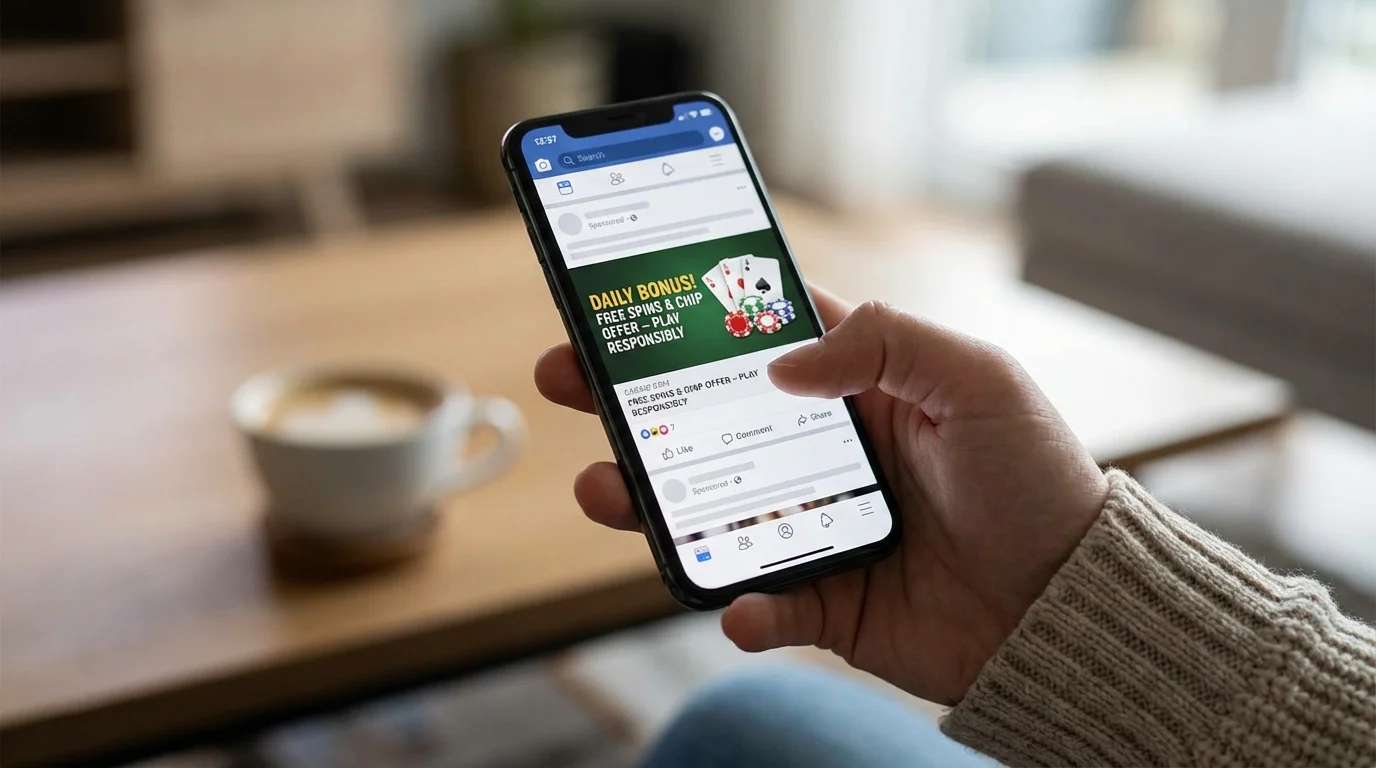
UKGC Advertising Standards for Casino Operators
Casino ads in the UK are subject to some of the strictest advertising rules in the world. The regulatory framework governing gambling advertising involves multiple bodies — the UK Gambling Commission, the Advertising Standards Authority, and the Committee of Advertising Practice — each with overlapping but distinct responsibilities. Together, they create a system where what a casino can say, where it can say it, and to whom it can say it are all constrained by enforceable rules.
The UKGC’s Licence Conditions and Codes of Practice include specific provisions on advertising. Licensed operators must ensure that all marketing is socially responsible, does not target vulnerable people, and does not exploit children or young people. Advertising must not suggest that gambling can be a solution to financial problems, present gambling as a rite of passage, or imply that skill can overcome chance in games where the outcome is random. These are not aspirational guidelines — they are licence conditions, and breaching them can result in regulatory action including financial penalties and licence reviews.
The ASA and CAP Codes set out detailed rules for the content and placement of gambling advertisements across all media: television, radio, print, online, and social media. Gambling ads must not be directed at under-18s, must not feature anyone who appears to be under 25, must not use imagery or language likely to appeal primarily to children, and must include responsible gambling messaging. The age restriction on individuals in gambling ads — appearing to be 25 or older, not just 18 — provides a buffer designed to prevent ads from resonating with younger audiences.
Television advertising is subject to additional time-based restrictions. The voluntary “whistle-to-whistle” ban, adopted by the Industry Group for Responsible Gambling, prohibits gambling advertising during live sport broadcasts before the 9pm watershed. This measure was introduced in response to concerns about the volume of gambling ads during football matches and other popular sporting events. While the ban is technically voluntary, compliance is near-universal among major operators, and the Gambling Act Review White Paper signalled that mandatory restrictions may follow.
Online advertising must comply with the same content rules as broadcast media, with additional requirements for digital-specific formats. Pop-up ads and auto-playing video ads for gambling are restricted on certain platforms. Email and SMS marketing requires explicit opt-in consent. Retargeting — showing gambling ads to users who have previously visited a casino site — must comply with both advertising standards and data protection regulations. And all online gambling ads must include a prominent link to responsible gambling resources.
Common Misleading Claims and How to Read Past Them
If an ad makes gambling sound like a sure thing, it is already breaking the rules. But not every misleading claim is as blatant as “guaranteed wins.” The more common tactics are subtler: framing a bonus as “free money,” using urgency to discourage careful evaluation, or presenting wagering requirements in a way that minimises their significance.
“Get £200 FREE when you sign up” is a headline that technically describes a 100% deposit match bonus, but the word “free” does heavy work. The £200 is not free in any meaningful sense — it comes with a wagering requirement that will cost you a statistically predictable amount to clear. The UKGC has pushed operators toward clearer bonus advertising, requiring that significant conditions are disclosed alongside the headline offer rather than buried in a linked terms page. But the incentive to lead with the most attractive number remains, and the degree to which terms are truly “prominent” varies between operators.
Countdown timers and “limited time” offers create artificial urgency. A banner stating “Offer ends in 2:47:31” discourages you from taking the time to read the terms, compare the offer with competitors, or consider whether you want to claim at all. In many cases, the offer is either perpetually available or replaced immediately by an identical one. The timer is a conversion tool, not a genuine scarcity signal.
Testimonials and win highlights — screenshots of large payouts, stories of life-changing jackpots — are used to create an impression of likely outcomes. These representations are not false (the wins did happen), but they are profoundly unrepresentative. The player who won £500,000 on a progressive jackpot is featured because that outcome is exceptional. The thousands of players who lost their deposits on the same game are not featured because that outcome is ordinary. The selective presentation creates a distorted picture of what gambling typically produces.
“Rated #1” or “Best Casino UK” claims in advertisements often come from affiliate review sites that receive commercial compensation from the operators they rank. The rating is not independent, and the methodology may be opaque or non-existent. These claims are not necessarily false — some affiliate sites do apply genuine evaluation criteria — but the commercial relationship between the reviewer and the reviewed should inform how much weight you give the endorsement.
Social Media, Influencers, and Affiliate Marketing
Not every casino recommendation is independent — look for the disclosure. The lines between editorial content, paid promotion, and affiliate marketing have blurred significantly in the gambling space, and social media has accelerated that blurring.
Influencer gambling promotions are subject to the same advertising rules as any other gambling advertisement. The ASA requires that sponsored content is clearly identified as such — typically with labels like “#ad,” “paid partnership,” or “sponsored.” In practice, compliance varies. Some influencers disclose prominently. Others bury the disclosure in a wall of hashtags or omit it entirely. The UKGC has signalled increased scrutiny of influencer gambling promotions, and the ASA has upheld complaints against gambling ads that failed to disclose commercial relationships adequately.
Affiliate marketing is the business model behind most casino comparison and review websites. These sites earn a commission — typically a share of the net gaming revenue generated by players they refer — for each customer who signs up through their links. This model creates an inherent conflict of interest: the site has a financial incentive to recommend casinos that pay the highest commission, not necessarily the casinos that offer the best player experience. Reputable affiliate sites manage this conflict through transparent methodology and editorial independence. Less reputable ones do not.
Identifying affiliate content is straightforward once you know what to look for. Check the website’s footer for advertising disclosure or affiliate disclaimer language. Look for links that include tracking parameters (e.g., URLs containing “ref=” or “aff=”). Consider whether the site reviews a wide range of operators or concentrates on a small number of heavily promoted brands. And apply the same critical reading to a casino recommendation that you would apply to any product review where the reviewer has a financial stake in your decision.
None of this means affiliate content is inherently untrustworthy. Some of the most useful casino comparison resources in the UK are affiliate-funded, and the commercial model enables detailed, regularly updated reviews that would not exist without financial support. The point is awareness: when someone recommends a casino, understand the relationship between the recommender and the recommended. If the relationship is commercial, factor that into your evaluation. If it is not disclosed, question why.
Marketing Is Information — Read It Critically
The best defence against misleading advertising is knowing what to look for. Casino marketing is not designed to help you make the most informed decision. It is designed to convert you from a browser into a depositor. That objective is not hidden — it is the fundamental purpose of advertising in any industry. The difference in gambling is that the product being sold has a built-in mathematical cost, and the advertising rarely acknowledges that cost with the same enthusiasm it applies to the headline bonus.
Read past the banner. Check the terms behind every offer. Recognise urgency tactics for what they are. Understand that testimonials represent exceptions, not norms. Know whether the site recommending a casino has a financial stake in your sign-up. And remember that the UKGC’s advertising rules exist to protect you — but they protect you most effectively when you understand what compliance looks like and can spot when it is absent.
Marketing is a source of information about what is available. It is not a source of advice about what is good. That distinction is yours to maintain.
Stay informed at legitonlinecasinouk. Also read our UKGC rules.